Subscribe, Follow & Share!
Apple / YouTube / Spotify
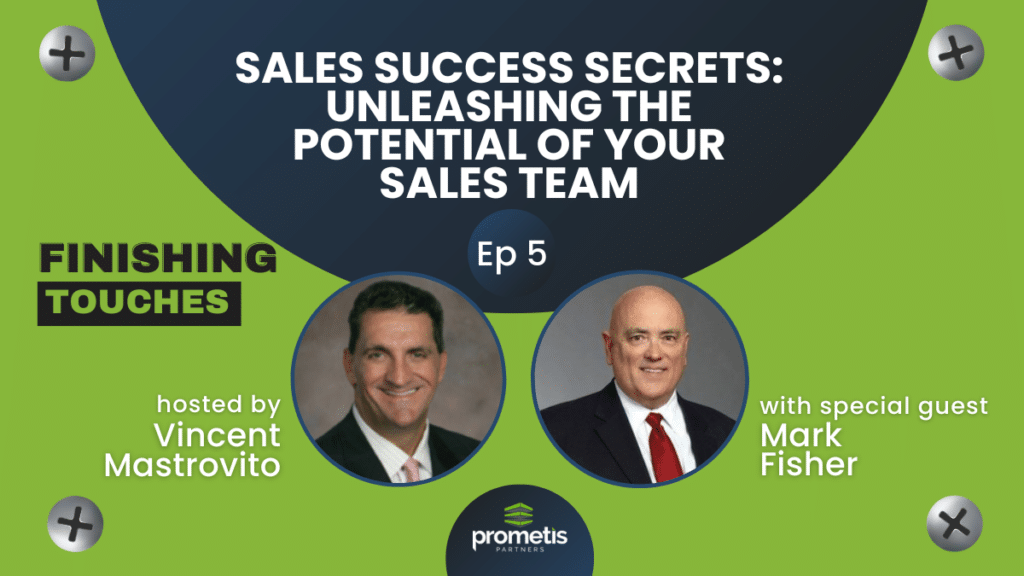
Mark Fisher joins the podcast to delve into the challenges faced by sales organizations and strategies for success. With over 30 years of sales experience, Mark has a proven track record of turning around struggling sales teams and enhancing the bottom line.
Mark’s expertise lies in his ability to track, record, and analyze sales data to identify areas for improvement. He has built successful sales organizations from scratch, doubled revenue for struggling companies, and implemented effective compensation plans that drive sales growth. His knack for asking the right questions and truly listening to clients’ needs sets him apart in the industry.
Align the salespeople’s behavior with the goals and objectives of the company, and then they end up making more money and the company ends up making more money. That’s always a good thing. – Mark Fisher
During the interview, Mark discusses the biggest challenges faced by sales organizations in recent years and shares his encounters while working with companies. He emphasizes the importance of aligning salespeople’s goals and values with the company’s objectives and developing a strong internal process. Mark also provides valuable insights into overcoming sales objections and engaging with the target audience in today’s digital landscape.
This episode is a must-listen for business owners and sales professionals who are looking to enhance their sales strategies, improve their communication within the sales organization, and leverage data and analytics to make informed business decisions. Mark’s knowledge and experience in sales management will inspire listeners to think outside the box and implement effective strategies to drive revenue growth.
To learn more about Mark Fisher and his expertise in sales management, visit his website. Don’t miss out on the opportunity to gain valuable insights from this seasoned sales professional.
If you enjoy the show, please subscribe and share it with someone you think might also find it beneficial. Thanks so much for listening!
Connect with Mark on LinkedIn: https://www.linkedin.com/in/mark-fisher-5b82132/
Subscribe, Follow & Share!


Transcript:
00:00:01 – Vincent Mastrovito
Good morning and welcome back to another episode of Finishing Touches, your Goto podcast for all things business transition related. I’m your host, Vincentnt Mastrovito, and today we have a special guest joining us, Mark Fisher, who brings over 30 years of sales experience to the table. Mark’s experience ranges from being successful prospect hunter to building entire sales teams both inside and outside positions. But what sets Mark apart in his ability to turn around struggling sales organizations and help them reach their full potential is the ability to track record and efficiently analyze why sales forces are struggling and implementing programs too quickly turn the situation around, ultimately enhancing the bottom line. So today we will be diving into some exciting discussion points with Mark. We’ll start by exploring some of the biggest challenges he has witnessed in sales organizations over the past few years. We’ll then kind of dive into some encounters when working with companies. So in a world where reaching a target audience is becoming increasingly challenging, we’ll also be picking Mark’s brain on the best ways to effectively engage with our audience in today’s digital landscape. And certainly we will not forget about the compensation plans. Mark will be sharing his best advice on developing or changing compensation plans that drive sales growth. Lastly, we’ll wrap up our conversation by uncovering Mark’s recommended strategies for developing a comprehensive list of questions to ask prospects. So grab a pen and paper, get ready to take some notes because we have a lot to cover today. Mark Fisher. Welcome to Finishing Touches. Thanks for having me, for being here.
00:01:53 – Mark Fisher
Happy to be here and look forward to awesome.
00:01:56 – Vincent Mastrovito
Awesome. So Mark, let’s talk a little bit about it with our listeners here. Let’s first kind of talk a little bit about your background and where you came from and why you kind of got into this environment of consulting on sales and sales organizations.
00:02:12 – Mark Fisher
Yep. Good question, Vincent. I’ve been in a complete sales capacity. My background is actually an MBA in finance, was trained to work on Wall Street, but was offered a great position with a wonderful company called Prometis Partners and learned so much at that organization to start out. But I’ve been in the industry for almost 40 years in a variety of capacity. You talked about building a sales organization. We actually built a company from scratch and sold it off to what was then HBO C McKesson in 1998. And then after that took a position with a company whose revenue had declined by 50% and actually doubled it from the original number. So actually a fourfold increase with them. So had a lot of great experiences with a lot of great people. The Pandemic did a lot of things for a lot of people, made a lot of changes. And at that point in my life. And my wife is the chief nursing officer of a hospital, and she took a new position with Corwell health. And so I thought it was time to go out on my own and actually impart a lot of the knowledge and the things that, you know, over that period of time and help other people. So that’s how I got into the fractional sales management business where I will go into companies not as a full time employee, but will fix specific problems. It may be that they need a vice president of sales for a period of time, for six months, and I will do that. Or maybe they just need new comp plans written. Or maybe they need to set up a CRM system. Maybe they need to evaluate what’s really going on in their sales organization and the changes they need to make. And I’ll do those type of assessments. So it’s really fun to work with different people and different challenges. The easiest thing in the world is to walk into someplace that’s running perfectly and you don’t have to do anything. I kind of get excited about going into places that aren’t doing so well and need help in kind of fixing the problems for them.
00:04:15 – Vincent Mastrovito
Yeah. Awesome. Yeah. Hey, thanks for sharing that because for our listeners that are going to be listening to this podcast, just as a reminder to all of them and anyone else, sales is what drives revenue into companies, right? So whether you’re providing a service or you’re providing a product, sales is what actually drives a revenue back to the overall revenue of the company. So let’s move on. Mark a little bit and talk a little bit about what do you see with some of the successful salespeople and the processes that you do about really overcoming some of the objections that they may get out in the field. Now, I understand this is going to vary from industry to industry, product or service, et cetera, but just in general, what are some of the successful strategies for overcoming sales? Objections?
00:05:11 – Mark Fisher
Absolutely. There’s an old saying that God gave you two ears and one mouth for a reason. And what I see out there and the best thing I can tell people is to listen, ask good questions and listen. Find out really what the problems are. So many salespeople today, they’re afraid of objections. They get objections and it’s like, oh my God, I have a problem and I’m never going to sell to this person because they don’t like this or they don’t like that. And really what the person is telling you with the objections is what you need to do to get their business. And if you can solve those objections, you’re the person that’s going to get their business. So the best questions to ask not only is find out what’s going on in their business, but what are the problems, what are the situations, what are the things that they would like to overcome? Because the biggest problem I see with salespeople is they go in and I call it the dump truck method of selling. They’ve gotten all this company literature and they’ve got all these promotional brochures, and they just go in there and they start rambling on for 15, 2030 minutes about everything, and they don’t even know anything about the customer. They don’t know what they want. They don’t know what their problems are. So the best thing you can do is ask questions, and by those questions, you learn. And I always felt that objections were a great thing. They’re basically telling me what I need to do to earn their business. And maybe you can solve that personally as a salesperson, or maybe you need to go back to your company and they need to tweak a product or add an enhancement to it. But boy, the best thing is to ask questions, use those two ears, and learn what you need to do to earn their business.
00:07:01 – Vincent Mastrovito
Yeah, it’s so interesting how difficult that really can be. Salespeople will probably tend to just get overly excited, or maybe they just haven’t had any real training or the training they’ve had. Maybe it needs to be brushed up. And I’m a firm believer that no matter how good you are, no differently than professional athletes. They always go back to the fundamentals during the offseason and maybe even during the season, but especially during the offseason is you got to find that time to say, okay, let me go back to the foundational things that got me here, and what are the things that we really need to do that are better? And how effectively can I be when I’m having a conversation? But that’s a great point, Mark. It just really listen to people and do your homework and have some really good questions that helps your potential client, your customer, explain to you a little bit more about what it is that they’re looking for and how can you help them with your product or services that you offer. So when we’re inside, Mark, of a sales organization and I don’t think that this really matters, whether it’s a large organization or call it a three to five person organization so big and small, it’s all the same. It’s just who’s doing the work? What are probably some of the three to five best key performance indicators that walking into a situation, you want to make sure either you see that’s being executed and implemented or that you would recommend that they execute and implement within their system.
00:08:33 – Mark Fisher
Yeah, from a company perspective, Vincent, I deal with organizations, and the biggest thing and then I’ll break it down from here is that in a lot of cases, the salespeople’s goals and objectives or attitudes mentality aren’t aligned with the company’s goals and objectives, and then that can break down into other things like comp plans. Do you incentivize the people in the right way? Some organizations take the easy way out and let’s pay them 5% on everything. But maybe you have products that have higher margins and lower margins and you adjust those for the comp plan. And what about new business versus existing business, the old hunter versus farming? What type of company are you? Where do you want them to focus their time? Adjust the compensation plan to manage their behavior, to kind of guide them down the appropriate path? Another big thing is really communication. And again, that goes back to not aligning the people’s performance or the way that they work with the company’s goals and objectives. There are so many organizations I go into that do not have regular sales meetings, whether it’s a quick call once a week, whether it’s to update the pipeline, whether it’s a quarterly sales meeting to make them feel a part of the company. Here’s where the company is going, here’s the products and services we’re developing. So the communication. But again, I think all of this comes back to the key thing that you need to align sales people’s behavior with the goals and objectives of the company and then that way they end up making more money and the company ends up making more money and that’s always a good thing at the end.
00:10:22 – Vincent Mastrovito
Oh yeah, I would think that is true and I think what you just said is probably pretty common in most companies and it probably lands back on the sales manager, certainly in the larger organizations. Right? Because the sales manager is most likely on the leadership team, and if he or she is on the leadership team, they completely understand the strategic planning and where this company really wants to go. And they should be communicating that, I’m assuming, right to their sales crew, to their team, and making sure that they have buy in as to what direction they want to go. I really liked your comment about if you go into an organization, you have some products or services that are higher margin than other ones and so those should have a different structure from compensation because if you give them the same structure to your point, let’s just use 5%, right? Would you agree this is almost at risk of taking money away from the company because you’re at a smaller margin, you’re paying the salesperson which makes your small margin even smaller or zero when you get to the back end of it, right?
00:11:36 – Mark Fisher
Absolutely. And what the salesperson will do will be take the path of least resistance, they’ll go to the product that they can sell the easiest and maybe it’s that new product that requires more time and more effort. It’s like why bother? I’m going to get paid the same amount of money for selling this thing that I can do in my sleep.
00:11:55 – Vincent Mastrovito
Yeah, let’s kind of move over. There’s a big talk. Obviously social media is huge today, especially for thought leadership and depending on what you do, let’s talk about the role of data and analytics play in identifying sales trends or making informed business decisions. So what have you seen in your travels and over the years of how do you usually look at data and use data when you go through this process?
00:12:26 – Mark Fisher
And again, you had mentioned earlier, Vincent, that this will vary by company and the type of customers that they have. But you’re absolutely right. Data is important. So many companies don’t use it. And I’ll go back to a basic thing. They don’t even have, like, win loss reports. They don’t know which accounts they’re winning and why they’re winning them. And they don’t know which accounts they’re losing and why they’re losing them. But accumulating the data of who your customers are, who the economic buyer is, what are the things about why they’re buying? We talked about the profit margins already. What products are we selling to what audiences, what are the margins on those products? And again, it goes back to that sales organization thing. What are the margins? Are we paying too much for too little sales? Are we not paying enough for sales that we want and that’s why we’re not getting them? But a lot of people will go in and try to sell, and they don’t even know the economic cycle of the buyer. In other words, what’s their fiscal year? Is it January 1? Is it october 1? Is it June 1? When do they usually spend money? When’s the right time to approach them? What’s the length of the sales cycle? Does product X take normally nine months to sell and product B takes three months to sell? But I can’t tell you how many organizations I walk into, and they basically they hire a salesperson says, here’s our product literature. You want to call on certain people and go after it. And they can not only help themselves by understanding their own business, but they can help the salesperson be much more productive by giving them the right information on how to target people. And you want to look at programs. You looked about social media and data. Are we getting more referrals through LinkedIn? Are we getting more referrals? Know some Facebook or Instagram account, know what are we using as social media that’s actually driving our business and driving customers to us? And again, I can’t tell you and you already know this, how many organizations don’t do any of this? And a lot of it comes back to small companies. Business owners are trying to do everything. They’re trying to run the sales organization, and they don’t have enough time in a week to do things like this. And that’s where I come in and kind of help them out with that.
00:14:47 – Vincent Mastrovito
Yeah, I think that is so well said. I mean, social media is a great platform and it’s also very dangerous, I think, right, and I think you have to with so many different social media platforms, are you B to B, B to C? Who is your customer to understand? Right. Just like you said, if you don’t understand who your customer is, what their buying cycle is, and what’s really going on, what messages should you be sending out and how do you track that data when you come back in? Strategic planning is about pivoting and working through and saying, okay, this is working. How can we get it to be working a little bit more effectively? Or it’s not working. We’ve been doing this for two or three, four quarters and just doesn’t seem to be gaining any traction. We’re going to use it, but we’re going to use it less and we’re going to focus our attention somewhere else, right?
00:15:40 – Mark Fisher
Absolutely.
00:15:42 – Vincent Mastrovito
I know in our word, because we’re B to B, we only use LinkedIn because it’s B to B. We certainly nothing against Facebook or Twitter or any of them, but we just don’t find our people on those social media sites. So we focus in those areas and make sure that we say, okay, how can we maximize that particular social media environment? Certainly your website is another key piece, right. You cannot how does your social media carry them back to your website? How does your website allow you to engage people, to bring them back into your CRM database and so on and so?
00:16:19 – Mark Fisher
Yep.
00:16:20 – Vincent Mastrovito
Awesome. So Mark, what would be one thing you would like to leave our clients and listeners with today as to what they need to think about when they’re looking for their sales teams or their sales process too? Because it could be the sales process, right?
00:16:41 – Mark Fisher
Yes. And that’s an integrated thing because like we’ve already talked about, a lot of people don’t have sales processes. They just hire people, give them some literature and say, go to it. Probably if I could say two things, you ask for one.
00:16:54 – Vincent Mastrovito
Sure, go right ahead. Yeah, absolutely.
00:16:56 – Mark Fisher
Again, it goes back to what I said earlier, align the salespeople’s goals, objectives, values with the company’s goals, objectives, values. And then the second thing would be, really have the proper internal process because the internal process will drive everything. The internal process is having the right CRM system, collecting the right data out of that system to give to the salespeople, whether it’s win loss reports or who their customers are and things like that. But yeah, have the best internal process you can absolutely have and then also aligning the values. If people can do those two things, they will generally have a fairly successful sales force. Now, obviously there’s outside influence like your competition, and maybe they develop the newest, greatest things and sliced bread and you’re scrambling to make that. But all things being equal, yeah, align the values and have a great internal process, and I think that you will find that everything else will work well within the sales organization.
00:18:00 – Vincent Mastrovito
Awesome. Mark, I want to thank you for being here today. Really appreciate you sharing some of your wisdom with our listeners. I know they will get some information out of this. You certainly can reach out to Mark and ask him any questions that you would like to ask. You can contact him either directly or you can contact him through us, through our website. So we hope that you enjoyed this episode of Finishing Touches. You can get more content out on our website@prometheuspartners.com and if our podcast has been helpful, please make sure that you leave a review to help us find others that can discover and get some of the information. Certainly stay up to date with some of the latest tips and insights that we have over on our website and our social media, YouTube, et cetera. And we look forward to accompanying you on your journey in the next episode. Thank you so much. Have a great day.
00:18:53 – Mark Fisher
Thanks for having me, Vincent.